Science Student Portal · Astronomy & Astrophysics · Tier 0
Scale, Time, and Invisible Light
Begin with three true ideas that can change the way you look up: Earth has a cosmic address, light is a messenger with a speed limit, and the universe is larger than the slice of light human eyes can see.
Module Identification
Discipline: Astronomy & Astrophysics
Tier / course: Tier 0 — Discovery & Curiosity · AST-000: The Wonder of the Cosmos
Module: Module 1 — Scale, Time, and Invisible Light
Learning mode: Interactive discovery on screen, with a printable packet for reflection and discussion.
Suggested materials: A screen and browser for the interactive version; a printed packet and pencil work well, too.
Invitation: You do not need a telescope, a perfect memory, or advanced math to begin. Bring your attention and let each surprising idea become a better question.
Scope Statement
This discovery module introduces three foundational astronomy ideas: a nested cosmic address, light as a message from the past, and the electromagnetic spectrum as a set of different windows on the same universe. It keeps the science real while using everyday language, imagery, and interactive models instead of algebra, scientific notation, trigonometry, equipment operation, or technical data analysis.
Earth, the Solar System, the Milky Way, the Local Group, the observable universe, light-years, look-back time, light's cosmic speed limit, visible light, infrared, radio, and X-rays.
Advanced calculations, telescope operation, navigation, engineering, and technical data analysis.
Every drawing and interactive is a teaching model. It can show a relationship clearly without being a literal map, a real photograph, or a complete explanation. Ask what it shows and what it leaves out.
Measurable Learning Outcomes
- Place Earth, the Solar System, the Milky Way, the Local Group, and the observable universe in the correct nested order.
- Explain in plain language why a light-year is a distance, why light has a cosmic speed limit, and why a distant view carries a message from the past.
- Describe visible light as one part of a larger electromagnetic spectrum and identify what infrared, radio, and X-ray observations can help reveal.
- Use the screen interactions to compare a light-time delay measured in seconds, minutes, and years.
- Distinguish an observation, a model, a visual translation, and an unsupported guess.
Core Concept Map & Discovery Reference
a nested map of where we belongLight-year
a distance made from one year of light travelLook-back time
the older story carried by distant lightCosmic speed limit
no message can outrun light through empty spaceElectromagnetic spectrum
the larger family of light beyond human sightFalse color
a visual translation of invisible informationScientific question
what was measured, represented, and inferred?
A small cosmic travel kit
| Word or place | Plain-language meaning | A useful way to remember it |
|---|---|---|
| Earth | Our planet and the place where every astronomical observation begins. | Home is the first line of the cosmic address. |
| Solar System | The Sun and everything that travels around it, including Earth. | Our neighborhood around one star. |
| Milky Way | The galaxy that contains our Solar System. | A city of stars, with our Solar System in one quiet neighborhood. |
| Local Group | A nearby family of galaxies that includes the Milky Way and Andromeda. | Our galaxy's wider neighborhood. |
| Observable universe | The part of the universe whose light has had time to reach us. | Not a wall and not a claim that nothing exists beyond it. |
| Light-year | The distance light travels in one year. | A ruler, not a clock. |
| Light-time | How long light or a radio signal needs to cross a distance. | A message cannot arrive before its travel time is over. |
| Cosmic speed limit | In empty space, light is the fastest way information can travel. | The universe does not allow an instant message across every distance. |
| Electromagnetic spectrum | The full family of light, including kinds eyes cannot detect. | Different windows for different clues. |
Learning Sequence
How to use this module: Do not rush to finish. Let the ideas change the size of your mental map. In astronomy, the feeling of being surprised is often the moment an everyday picture of the world has become larger and more accurate.
1.1
Our Cosmic Address
Imagine writing your home address and then discovering that the page has room for bigger and bigger lines. The first line is Earth, the one planet you know from the inside. Earth travels around the Sun with other worlds, moons, rocks, and icy bodies. That neighborhood is the Solar System: one family gathered around one star.
The Solar System lives inside the Milky Way, our galaxy. A galaxy is a huge system held together by gravity; gravity is the pull that keeps things connected, like an invisible set of rules that keeps a spinning carousel from flying apart. The Milky Way holds stars, gas, dust, planets, and much more. It is not a crowded city in the ordinary sense—most of it is astonishingly empty—but the “city of lights” comparison helps: our Sun is one light in a vast neighborhood, not the whole city.
The Milky Way belongs to the Local Group, a nearby family of galaxies that includes Andromeda. Think of it as a group of island cities separated by a dark ocean so wide that light needs millions of years to cross much of it. Beyond the Local Group are larger groups and chains of galaxies. The largest region we can study with light that has reached us is called the observable universe.
Observable universe is a serious scientific phrase with a humble meaning. It is not a wall around all existence. It is an information horizon: the farthest part whose light has had time to arrive. Stand at the shore on a foggy day. The edge of what you can see is not the edge of the ocean; it is the edge of what information has reached your eyes. In the same way, the observable universe is not necessarily the edge of everything. It is the edge of the cosmic news that can have reached us so far.
These places are nested, not separate stops on a road trip. Think of a room inside a home, a home inside a neighborhood, a neighborhood inside a city. The comparison eventually breaks because space is far more open than any city, but it gives us the essential idea: Earth is small without being isolated. We are not outside the universe looking in. We are part of it, using one small world to learn how the larger whole works.
From inside the Milky Way, we do not see our galaxy as a neat spiral floating in front of us. We see a pale band across the sky because we are looking through the crowded disk of our own stellar home. That difference matters. A diagram can show the big shape of something even when your actual viewpoint is from inside it. Science often works this way: it builds a better map than a single viewpoint can provide.
- 1Earthour home planet
- 2Solar Systemour star's neighborhood
- 3Milky Wayour home galaxy
- 4Local Groupa nearby family of galaxies
- 5Observable universethe horizon of light that has reached us
Each place contains the one before it. This drawing shows belonging, not distances to scale.
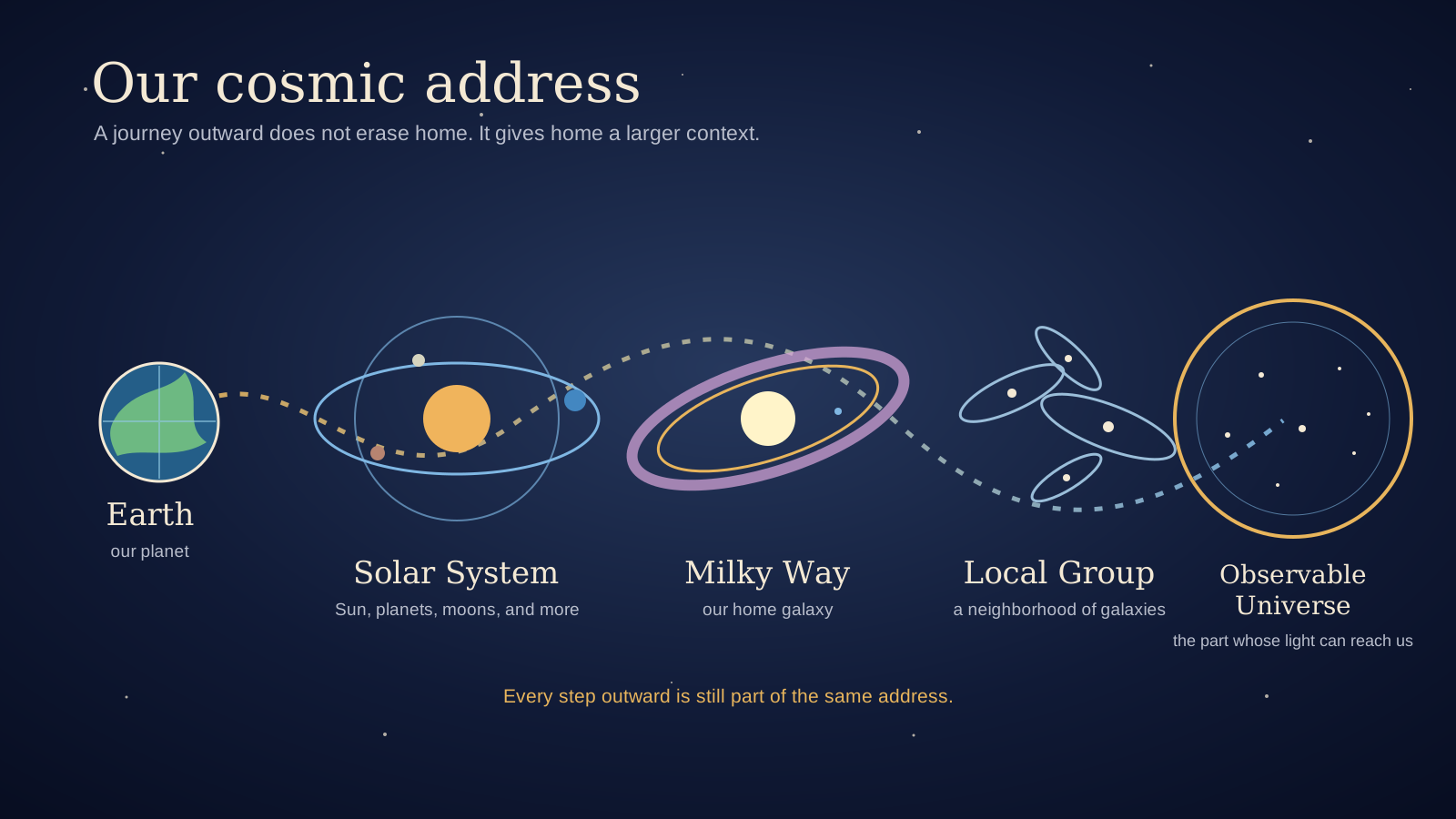
Earth is not the center of the universe, but it is the center of every observation you make. That is enough to begin a map—and enough to ask better questions.
1.2
Interactive: Put Your Cosmic Address in Order
Use the blocks below to build the address from smallest to largest. On a computer, drag a block into a numbered space. On a touch screen or with a keyboard, select a block, then select the space where it belongs. The screen will tell you as soon as the whole address is in the correct order.
Screen interaction · works offline
Cosmic Address Sort
Start with the place that contains you. End with the largest region described in this module.
- 1SmallestSelect or drop a block here
- 2Contains the firstSelect or drop a block here
- 3Contains the secondSelect or drop a block here
- 4Contains the thirdSelect or drop a block here
- 5LargestSelect or drop a block here
Choose a block, then choose its place in the address.
Print answer: Earth → Solar System → Milky Way → Local Group → observable universe.
1.3
Time Travel Is Real: The Light-Year
When people first hear light-year, it sounds like a time measurement. It is not. A light-year is a distance: the distance light travels in one year. Astronomers use it because the space between stars is too large to feel useful in miles or kilometers. A light-year is a giant ruler made from the most reliable messenger we have: light.
Light moves at about 300,000 kilometers each second in empty space. That is so fast that it could circle Earth many times in one second. Yet space is so vast that even this speed does not make every journey quick. In modern physics, light's speed is a cosmic speed limit: it is the fastest way information can travel through empty space. Think of it as the fastest mail service the universe permits. You can build a better receiver, a brighter transmitter, or a larger telescope, but you cannot make the message arrive before light has crossed the distance.
That fact turns the sky into a library of old messages. Sunlight takes a little more than eight minutes to reach Earth, so the Sun you see is a little more than eight minutes old. Moonlight reaches us in about 1.3 seconds. If a star is ten light-years away, the light reaching you tonight began its trip about ten years ago. Looking farther out is not a magical machine that lets us visit the past. It is more precise and more surprising: it lets us receive physical evidence that has been traveling since the past.
Imagine ordinary mail with no way to speed it up. A postcard from next door arrives almost immediately. A postcard from another country takes longer. In space, the delay can be years, thousands of years, or millions of years. The nearby galaxy Andromeda is roughly 2.5 million light-years away, so its light began its journey long before modern humans built cities. The light is not an old photograph stored somewhere in the sky. It is the actual light that left the galaxy then and is arriving here now.
Astronomers read that arriving light carefully. Its brightness, color, tiny shifts in its pattern, and changes over time can each tell part of a story about the object when the light set out. This is why a telescope is more than a magnifying tool. It is a time-reading tool: it gathers messages from different chapters of the universe's history, all arriving at our small planet.
- 1.3 secondsThe Moona brief but real delay
- 8 minutesThe Sunthis morning's sunlight left before it arrived
- 10 yearsa star 10 light-years awayyou see a decade-old message
- ~2.5 million yearsAndromedaa story that began before modern humans
The farther away a source is, the older the light-message we receive.
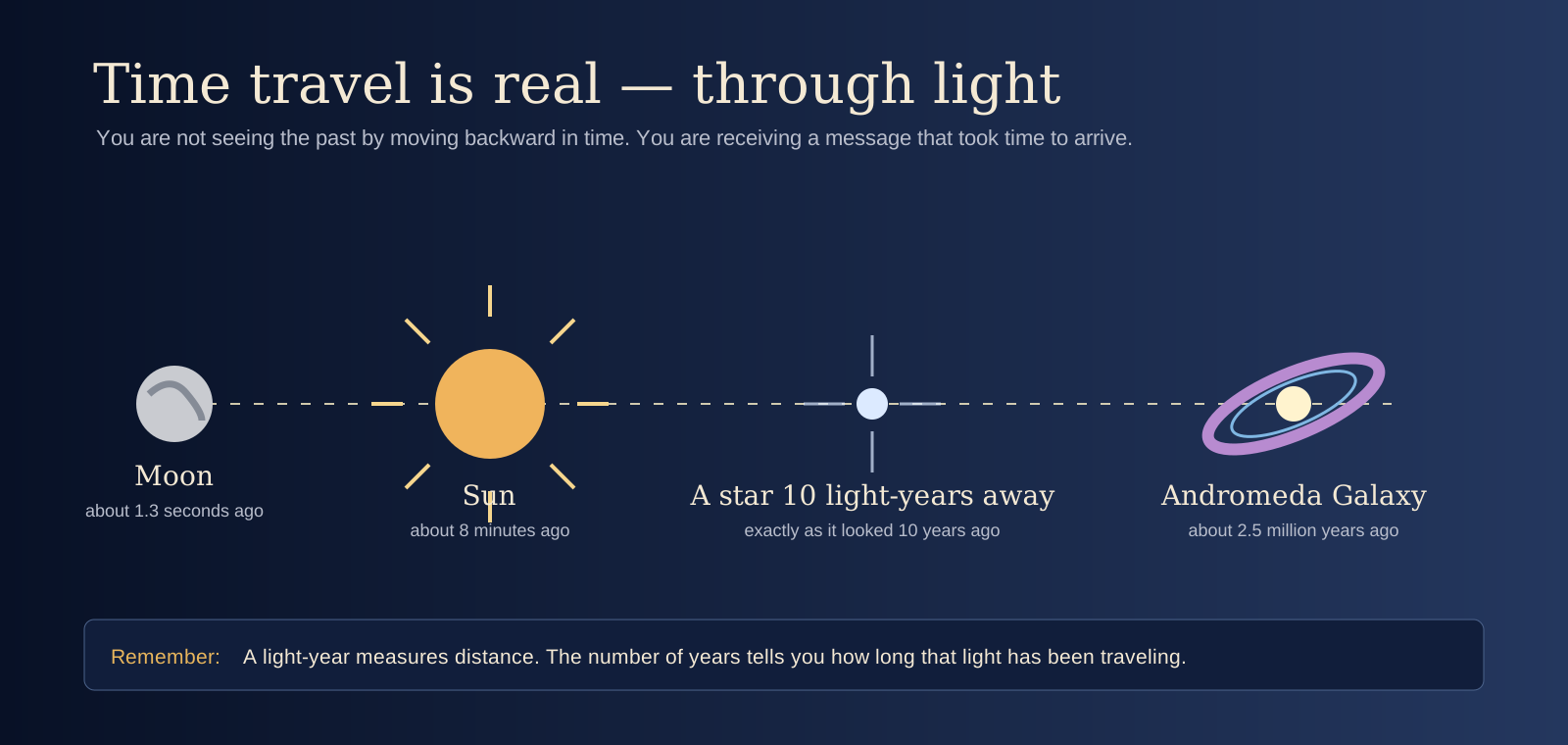
A story without an equation
Question: What can you honestly say when you learn that a star is 10 light-years away?
- The star is a very great distance away.
- The light reaching you tonight has traveled for about 10 years.
- Your view shows the star roughly as it was about 10 years ago.
- You cannot use that older message alone to know exactly what the star is doing at this instant.
This does not make astronomy less real. It makes it richer. Every observation comes with a travel history. The next interactive will put that idea beside your own life, not to make the universe smaller, but to show how a personal timeline can fit inside a cosmic one.
1.4
The Invisible Universe
Human eyes see a narrow strip of the light family called visible light. It is the strip that lets you see a sunset, a green leaf, or a bright star. But the universe sends much more than that. Radio waves, infrared, ultraviolet, X-rays, and gamma rays are all kinds of light. The long name for this whole family is the electromagnetic spectrum. Think of a piano keyboard that continues far beyond the keys your hands can reach: our eyes can play only a small middle section, while instruments can notice many more notes.
Light can also be described as a wave. A wave is a repeating pattern that carries energy and information, like a rhythm passed along a jump rope. In the light family, some waves are stretched far apart and some are packed very close together. That difference changes the clues they bring. The science is not saying that light is literally a rope or a sound. The rope is only a picture for the repeating pattern. Light can cross empty space, while sound needs material such as air or water to travel.
Infrared is light our eyes cannot see that is often connected with warmth. It can help astronomers study warm dust and places where new stars are forming inside clouds. A stellar nursery is exactly what it sounds like: a region where new stars are being born. Picture a lamp behind a thin curtain. Visible light may be scattered or blocked by the curtain, while another kind of light can reveal a different part of what is behind it. Infrared does not make dust disappear like magic, but it can provide clues that visible light alone may hide.
Radio waves are also light, not sound drifting through space. They can reveal cold gas, magnetic activity, and structures that are difficult to notice with eyes alone. A radio telescope does not “listen” to space in the ordinary way; it detects radio light and turns the measurements into information we can study. Calling it listening is a useful metaphor, like calling a thermometer a way to “hear” temperature, but the instrument is measuring real signals.
X-rays can reveal very hot gas and energetic activity. They help astronomers study matter moving near some black holes. A black hole itself does not shine like a lamp, and an X-ray image does not show a secret picture from inside it. Instead, scientists can see the extreme surroundings: gas heated as it falls, circles, or is pushed away. It is like noticing a powerful fan from the leaves and dust it moves, even if you cannot see the fan's blades.
Earth's atmosphere is part of this story. It lets some kinds of light reach the ground while blocking much of others. That is good for life because the atmosphere protects us from forms of radiation that can be harmful. It also means astronomers sometimes place instruments high in the air or in space to collect kinds of light that do not easily reach the ground. Needing different observatories is not a weakness. It is a reminder that the universe asks us to look in more than one way.
longer waves←Different wavelengths reveal different clues→shorter waves
- Radiocold gas and magnetic activity
- Infraredwarm dust and star-forming regions
- Visiblethe narrow window of our eyes
- Ultraviolethot stars and intense energy
- X-rayvery hot gas and extreme activity
- Gamma raythe most energetic events
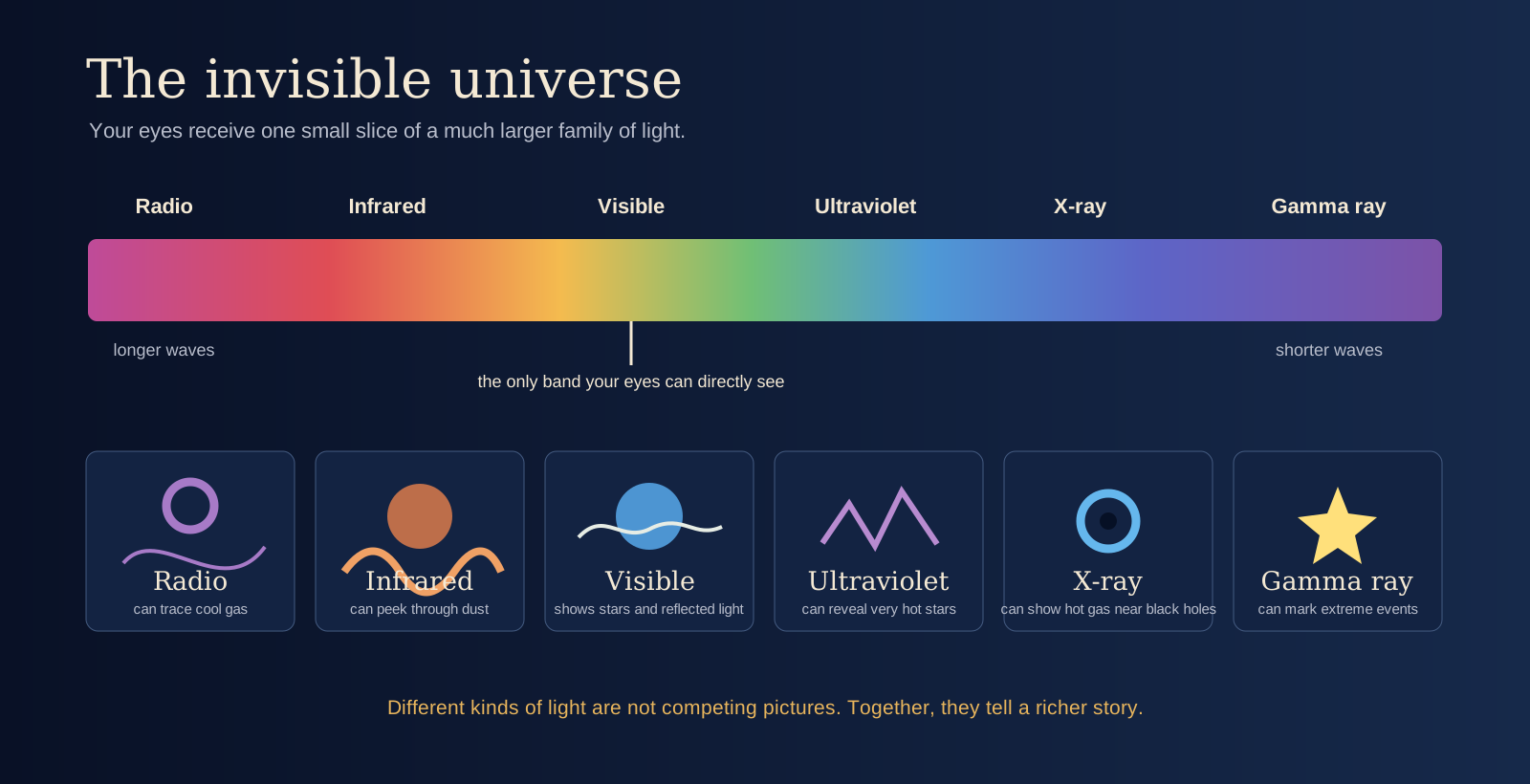
When an astronomy image uses turquoise, violet, or gold for a kind of light you cannot see, the colors are often chosen to translate data into a visual language. This is called a false-color or representative-color image: “false” means the color is not a literal eye-view, not that the evidence is made up. It is honest when the caption explains what each color represents. The useful question is not “Is this exactly what my eyes would see?” but “What does this color stand for, and what evidence does it help me notice?”
“A detector received a pattern of light.” That is the evidence at the beginning.
“This color represents infrared or X-ray information.” That makes unseen evidence visible for people.
“This may reveal warm dust, hot gas, or energetic activity.” That is a tested explanation that can be checked with more evidence.
1.5
Interactive: Change the Window, Change the Story
Use the slider to move from a visible-light view to an infrared view and then to an X-ray view of the same teaching-model galaxy. The shape does not change because the galaxy suddenly becomes three different things. Your window changes, so different clues become easier to notice.
The galaxy does not change; the window of light changes, along with the clues that become easier to notice.
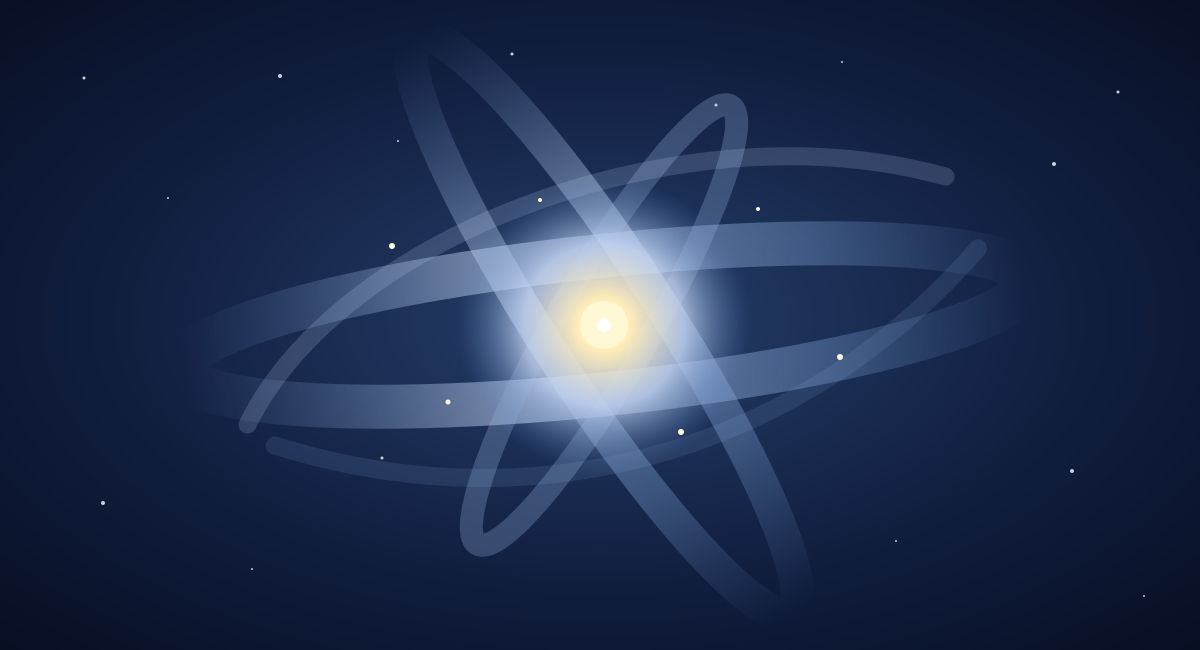
Starlight and the broad structure that eyes and ordinary cameras can receive.
Warm dust and star-forming regions that can be harder to notice in visible light.
Very hot gas and energetic regions that create a different set of clues.
Knowledge Checks
These four low-stakes checks run entirely in this page. The feedback is for learning, not a judgment about whether you belong in science.
Works offlineApplied Evidence of Learning
Accessibility and Student-Support Requirements
- Offline first: all diagrams, image layers, form feedback, and interactions live inside the site package. The core learning experience does not rely on streaming media or remote imagery.
- Progress recovery: evaluated work is kept on the device during an interruption and syncs to a signed-in learning account when an internet connection is available.
- Privacy by design: the personal star simulator uses an entered age only to create an on-screen result. The age and birth-year estimate are never sent with the saved learning record.
- Keyboard and touch support: the address activity can be completed by selecting a block and then a slot; the wavelength interaction uses a native range control; and both new simulations use standard form controls and live status text.
- Readable by design: the main teaching language uses short paragraphs, familiar metaphors, headings, captions, and plain-language definitions before technical terms are repeated.
- Print-ready: printing removes navigation and controls while keeping static explanations, diagrams, simulator notes, tables, and the final-test questions.
- Visual support: figures include alternative text and captions. Color supports the teaching illustrations but does not carry the only meaning.
- Language support: the complete Spanish edition—including locally authored figures and interactive labels—follows the site-wide EN / ES setting.
CEU and Completion Record
| Learning time | 2.0 discovery hours |
|---|---|
| CEU record value | Discovery module — no CEU value. |
| Interactive completion | Cosmic Address Sort, Invisible Universe Slider, Personal Star Time Machine, and Mission Control Comm Simulator explored locally. |
| Knowledge checks | Four formative checks completed and feedback reviewed. |
| Cumulative exam | Passing threshold: 80% or higher (8 of 10 questions). |
| Applied evidence | Star Time Machine launched and Moon, Mars, and Alpha Centauri communication missions completed. |
| Next pathway option | Continue with future AST-000 discovery modules or begin AST-101 when you are ready for more quantitative astronomy. |
Curriculum Quality Record
Version / revision dateAST-000-M1 v3.0 · 2026-08-08
Curriculum statusPublished Tier 0 discovery module. AST-000 Modules 2–5 remain in development.
Audience reviewDesigned for absolute beginners, younger learners ages 10+, and curious adults. English and Spanish language paths require age-appropriate astronomy-vocabulary review after future content changes.
Scientific scope reviewIntroductory conceptual astronomy only. No advanced calculation, equipment operation, navigation, or safety-critical instruction is claimed.
Accessibility reviewKeyboard, touch, print, semantic form, live-status, caption, alternative-text, and local-asset implementation included; revalidate after content or language changes.
Visual asset recordFigures and interactive galaxy layers are locally authored teaching diagrams. They are illustrative, not scale-accurate spacecraft images or calibrated scientific datasets.
Source-validation log
- NASA Science — Solar System, Galaxy, Universe: What's the Difference?. Cosmic-address framing and galaxy-scale context.
- NASA Science — What is a light-year?. Light-year definition and light-travel context.
- NASA Science — Time Travel: Observing Cosmic History. Look-back time explanation.
- NASA Science — Introduction to the Electromagnetic Spectrum. Spectrum overview and why astronomy uses several light windows.
- NASA Science — What is a light-year?. Light-speed, light-time, and the Alpha Centauri comparison used in the communication simulator.
Maintenance trigger: revisit source links, age guidance, accessibility notes, and the local interactive behavior at least every 24 months or after a material curriculum revision.
End-of-Module Cumulative Exam
Completion threshold: 80% or higher (8 of 10 questions) marks this final assessment as passed. When you are signed in, the scored result is added to your learning record. If your connection drops, it stays on this device and syncs when you are back online.
Learning direction: Complete all ten questions before scoring. If you miss something, read the feedback, return to the relevant part of the module, and try again.
Portal Estudiantil de Ciencias · Astronomía y Astrofísica · Nivel 0
Escala, tiempo y luz invisible
Comienza con tres ideas verdaderas que pueden cambiar la forma en que miras hacia arriba: la Tierra tiene una dirección cósmica, la luz es una mensajera con límite de velocidad y el universo es mayor que la franja de luz que los ojos humanos pueden ver.
Identificación del módulo
Disciplina: Astronomía y Astrofísica
Nivel / curso: Nivel 0 — Descubrimiento y curiosidad · AST-000: La maravilla del cosmos
Módulo: Módulo 1 — Escala, tiempo y luz invisible
Modo de aprendizaje: Descubrimiento interactivo en pantalla, con un paquete imprimible para reflexión y conversación.
Materiales sugeridos: Una pantalla y un navegador para la versión interactiva; un paquete impreso y un lápiz también funcionan muy bien.
Invitación: No necesitas un telescopio, memoria perfecta ni matemáticas avanzadas para empezar. Trae tu atención y deja que cada idea sorprendente se convierta en una pregunta mejor.
Declaración de alcance
Este módulo de descubrimiento presenta tres ideas fundamentales de la astronomía: una dirección cósmica anidada, la luz como mensaje del pasado y el espectro electromagnético como un conjunto de ventanas distintas hacia el mismo universo. Mantiene la ciencia real usando lenguaje cotidiano, imágenes y modelos interactivos en lugar de álgebra, notación científica, trigonometría, operación de equipos o análisis técnico de datos.
La Tierra, el Sistema Solar, la Vía Láctea, el Grupo Local, el universo observable, años luz, tiempo de mirada al pasado, el límite cósmico de velocidad de la luz, luz visible, infrarrojo, radio y rayos X.
Cálculos avanzados, operación de telescopios, navegación, ingeniería y análisis técnico de datos.
Cada dibujo e interacción es un modelo de enseñanza. Puede mostrar una relación con claridad sin ser un mapa literal, una fotografía real o una explicación completa. Pregunta qué muestra y qué deja fuera.
Resultados de aprendizaje medibles
- Colocar la Tierra, el Sistema Solar, la Vía Láctea, el Grupo Local y el universo observable en el orden anidado correcto.
- Explicar con lenguaje sencillo por qué un año luz es una distancia, por qué la luz tiene un límite cósmico de velocidad y por qué una vista distante trae un mensaje del pasado.
- Describir la luz visible como una parte de un espectro electromagnético mayor e identificar lo que las observaciones infrarrojas, de radio y de rayos X pueden ayudar a revelar.
- Usar las interacciones de pantalla para comparar retrasos de viaje de la luz medidos en segundos, minutos y años.
- Distinguir entre una observación, un modelo, una traducción visual y una suposición sin respaldo.
Mapa conceptual central y referencia de descubrimiento
un mapa anidado de dónde pertenecemosAño luz
una distancia hecha con un año de viaje de la luzTiempo de mirada al pasado
la historia más antigua que lleva la luz distanteLímite cósmico de velocidad
ningún mensaje puede superar a la luz en el espacio vacíoEspectro electromagnético
la familia mayor de luz más allá de la vista humanaFalso color
una traducción visual de información invisiblePregunta científica
¿qué se midió, representó e infirió?
Un pequeño kit de viaje cósmico
| Palabra o lugar | Significado en palabras sencillas | Una forma útil de recordarlo |
|---|---|---|
| Tierra | Nuestro planeta y el lugar donde comienza toda observación astronómica. | El hogar es la primera línea de la dirección cósmica. |
| Sistema Solar | El Sol y todo lo que viaja a su alrededor, incluida la Tierra. | Nuestro vecindario alrededor de una estrella. |
| Vía Láctea | La galaxia que contiene nuestro Sistema Solar. | Una ciudad de estrellas, con nuestro Sistema Solar en un vecindario tranquilo. |
| Grupo Local | Una familia cercana de galaxias que incluye la Vía Láctea y Andrómeda. | El vecindario más amplio de nuestra galaxia. |
| Universo observable | La parte del universo cuya luz ha tenido tiempo de llegar hasta nosotros. | No es una pared ni una afirmación de que no exista nada más allá. |
| Año luz | La distancia que la luz recorre en un año. | Una regla, no un reloj. |
| Tiempo de viaje de la luz | Cuánto tarda la luz o una señal de radio en cruzar una distancia. | Un mensaje no puede llegar antes de terminar su viaje. |
| Límite cósmico de velocidad | En el espacio vacío, la luz es la forma más rápida en que puede viajar la información. | El universo no permite un mensaje instantáneo a través de cualquier distancia. |
| Espectro electromagnético | La familia completa de luz, incluidos tipos que los ojos no detectan. | Ventanas diferentes para pistas diferentes. |
Secuencia de aprendizaje
Cómo usar este módulo: no te apresures a terminar. Deja que las ideas cambien el tamaño de tu mapa mental. En astronomía, sentir sorpresa suele ser el momento en que una imagen cotidiana del mundo se hizo más grande y más precisa.
1.1
Nuestra dirección cósmica
Imagina escribir la dirección de tu casa y descubrir que la página tiene espacio para líneas cada vez más grandes. La primera línea es la Tierra, el único planeta que conoces desde dentro. La Tierra viaja alrededor del Sol junto con otros mundos, lunas, rocas y cuerpos helados. Ese vecindario es el Sistema Solar: una familia reunida alrededor de una estrella.
El Sistema Solar vive dentro de la Vía Láctea, nuestra galaxia. Una galaxia es un sistema enorme unido por la gravedad; la gravedad es el tirón que mantiene conectadas las cosas, como un conjunto invisible de reglas que evita que un carrusel que gira lance sus piezas hacia afuera. La Vía Láctea contiene estrellas, gas, polvo, planetas y mucho más. No es una ciudad llena en el sentido cotidiano —la mayor parte es sorprendentemente vacía—, pero la comparación con una ciudad de luces ayuda: nuestro Sol es una luz en un vecindario inmenso, no toda la ciudad.
La Vía Láctea pertenece al Grupo Local, una familia cercana de galaxias que incluye a Andrómeda. Piensa en él como un grupo de ciudades-isla separadas por un océano oscuro tan ancho que la luz necesita millones de años para cruzar gran parte de él. Más allá del Grupo Local hay conjuntos y cadenas mayores de galaxias. La región más grande que podemos estudiar con la luz que nos ha alcanzado se llama universo observable.
Universo observable es una frase científica seria con un significado humilde. No es una pared alrededor de toda la existencia. Es un horizonte de información: la parte más lejana cuya luz ha tenido tiempo de llegar. Imagina estar en la orilla en un día de niebla. El borde de lo que ves no es el borde del océano; es el borde de la información que llegó a tus ojos. Del mismo modo, el universo observable no es necesariamente el borde de todo. Es el borde de las noticias cósmicas que han podido alcanzarnos hasta ahora.
Estos lugares están anidados, no son paradas separadas de un viaje por carretera. Piensa en una habitación dentro de una casa, una casa dentro de un vecindario y un vecindario dentro de una ciudad. La comparación deja de funcionar por completo porque el espacio es mucho más abierto que cualquier ciudad, pero entrega la idea esencial: la Tierra es pequeña sin estar aislada. No estamos fuera del universo mirando hacia adentro. Somos parte de él y usamos un pequeño mundo para aprender cómo funciona el conjunto mayor.
Desde dentro de la Vía Láctea, no vemos nuestra galaxia como una espiral ordenada flotando frente a nosotros. Vemos una banda pálida en el cielo porque miramos a través del disco lleno de estrellas de nuestro propio hogar estelar. Esa diferencia importa. Un diagrama puede mostrar la forma grande de algo aun cuando tu punto de vista real está dentro de ello. La ciencia suele trabajar así: construye un mapa mejor que el que puede ofrecer un solo punto de vista.
- 1Tierranuestro planeta hogar
- 2Sistema Solarel vecindario de nuestra estrella
- 3Vía Lácteanuestra galaxia hogar
- 4Grupo Localuna familia cercana de galaxias
- 5Universo observableel horizonte de luz que nos ha alcanzado
Cada lugar contiene al anterior. El dibujo muestra pertenencia, no distancias a escala.
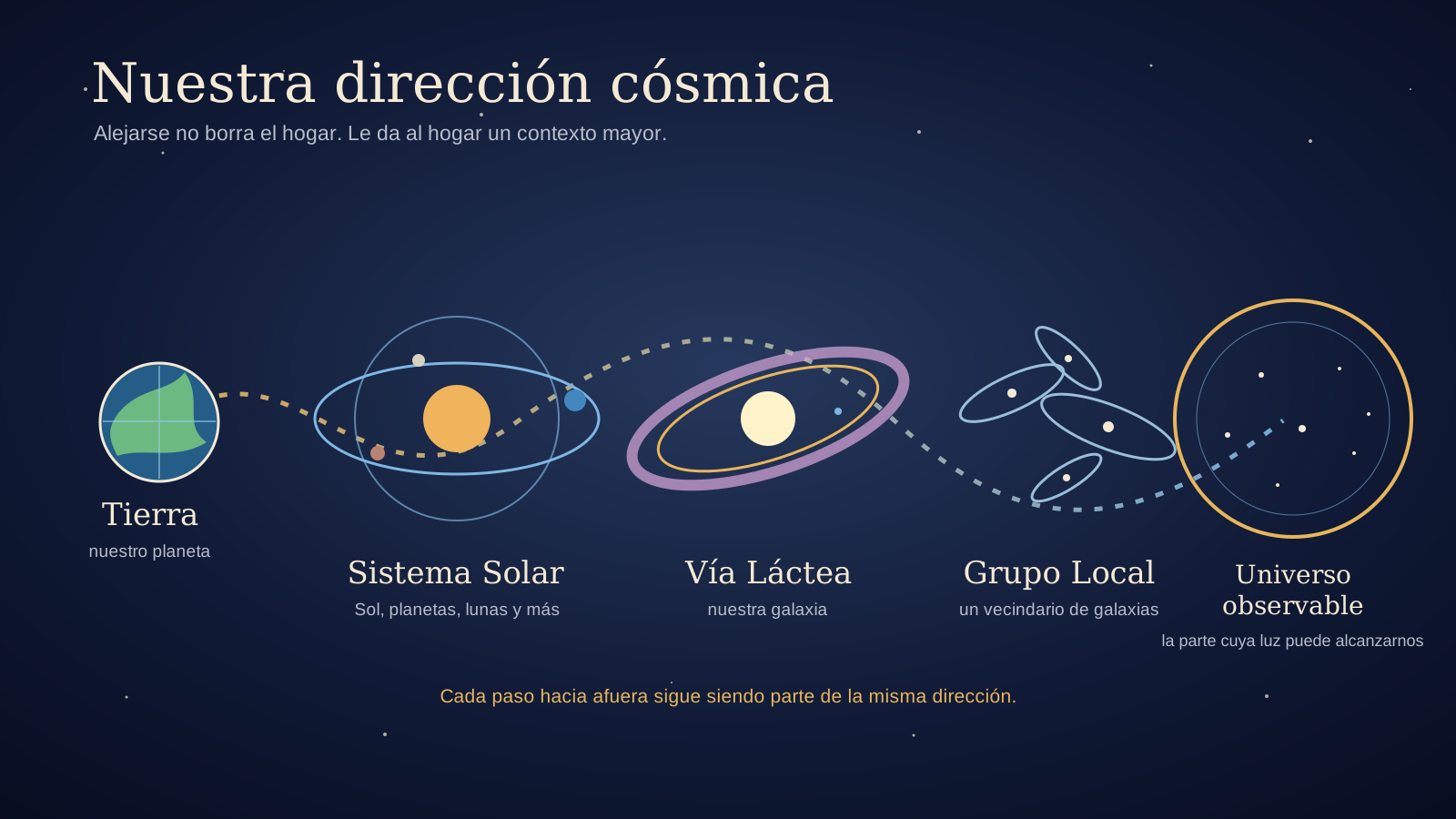
La Tierra no es el centro del universo, pero es el centro de toda observación que haces. Eso basta para comenzar un mapa y para hacer preguntas mejores.
1.2
Interactivo: ordena tu dirección cósmica
Usa los bloques siguientes para construir la dirección desde lo más pequeño hasta lo más grande. En una computadora, arrastra un bloque a un espacio numerado. En pantalla táctil o con teclado, selecciona un bloque y luego el espacio donde pertenece. La pantalla te avisará en cuanto toda la dirección esté en el orden correcto.
Interacción en pantalla · funciona sin conexión
Ordena la dirección cósmica
Comienza con el lugar que te contiene. Termina con la región más grande descrita en este módulo.
- 1Más pequeñoSelecciona o suelta un bloque aquí
- 2Contiene al primeroSelecciona o suelta un bloque aquí
- 3Contiene al segundoSelecciona o suelta un bloque aquí
- 4Contiene al terceroSelecciona o suelta un bloque aquí
- 5Más grandeSelecciona o suelta un bloque aquí
Elige un bloque y luego el lugar que le corresponde en la dirección.
Respuesta impresa: Tierra → Sistema Solar → Vía Láctea → Grupo Local → universo observable.
1.3
El viaje en el tiempo es real: el año luz
Cuando las personas oyen por primera vez año luz, suena como una medida de tiempo. No lo es. Un año luz es una distancia: la distancia que recorre la luz en un año. Las y los astrónomos lo usan porque el espacio entre las estrellas es demasiado grande para que millas o kilómetros resulten fáciles de imaginar. Un año luz es una regla gigantesca hecha con la mensajera más confiable que tenemos: la luz.
La luz viaja a unos 300,000 kilómetros por segundo en el espacio vacío. Es tan rápida que podría dar muchas vueltas a la Tierra en un segundo. Sin embargo, el espacio es tan inmenso que incluso esta velocidad no hace corto cada viaje. En la física moderna, la velocidad de la luz es un límite cósmico de velocidad: es la forma más rápida en que la información puede viajar por el espacio vacío. Piensa en ella como el correo más veloz que permite el universo. Puedes construir un receptor mejor, un transmisor más brillante o un telescopio mayor, pero no puedes hacer que el mensaje llegue antes de que la luz haya cruzado la distancia.
Ese hecho convierte el cielo en una biblioteca de mensajes antiguos. La luz del Sol tarda un poco más de ocho minutos en llegar a la Tierra, así que el Sol que ves tiene un poco más de ocho minutos de antigüedad. La luz de la Luna llega en unos 1.3 segundos. Si una estrella está a diez años luz, la luz que te llega esta noche comenzó su viaje hace unos diez años. Mirar más lejos no es una máquina mágica para visitar el pasado. Es más preciso y más sorprendente: nos permite recibir evidencia física que ha estado viajando desde el pasado.
Imagina correo ordinario sin ninguna forma de acelerarlo. Una postal de la casa de al lado llega casi enseguida. Una postal de otro país tarda más. En el espacio, el retraso puede ser de años, miles de años o millones de años. La galaxia cercana de Andrómeda está aproximadamente a 2.5 millones de años luz, así que su luz inició el viaje mucho antes de que los humanos modernos construyeran ciudades. La luz no es una fotografía antigua guardada en algún lugar del cielo. Es la luz real que salió de la galaxia entonces y está llegando aquí ahora.
Las y los astrónomos leen con cuidado esa luz que llega. Su brillo, color, pequeños cambios en su patrón y variaciones a lo largo del tiempo pueden contar parte de la historia del objeto cuando la luz salió. Por eso un telescopio es más que una herramienta de aumento. Es una herramienta para leer el tiempo: reúne mensajes de distintos capítulos de la historia del universo, todos llegando a nuestro pequeño planeta.
- 1.3 segundosLa Lunauna demora breve, pero real
- 8 minutosEl Solla luz solar de esta mañana salió antes de llegar
- 10 añosuna estrella a 10 años luzves un mensaje de hace una década
- ~2.5 millones de añosAndrómedauna historia que comenzó antes de nuestra especie moderna
A mayor distancia, más antiguo es el mensaje de luz que recibimos.
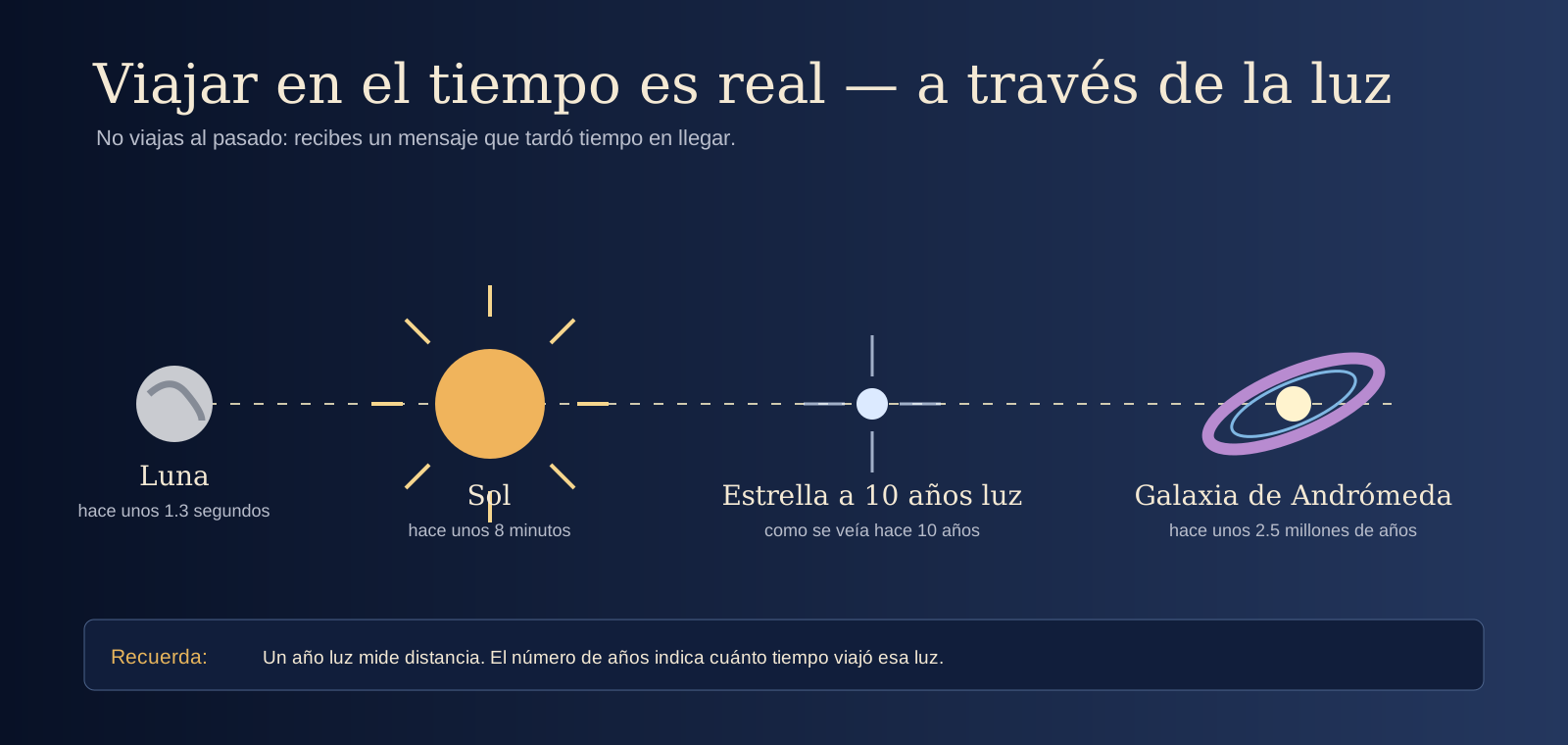
Una historia sin ecuación
Pregunta: ¿Qué puedes decir con honestidad cuando descubres que una estrella está a 10 años luz?
- La estrella está a una distancia muy grande.
- La luz que te llega esta noche ha viajado aproximadamente 10 años.
- Tu vista muestra la estrella aproximadamente como era hace 10 años.
- No puedes usar solo ese mensaje antiguo para saber exactamente qué hace la estrella en este instante.
Esto no hace que la astronomía sea menos real. La hace más rica. Cada observación tiene una historia de viaje. La siguiente interacción pondrá esa idea junto a tu propia vida, no para hacer el universo más pequeño, sino para mostrar cómo una línea de tiempo personal puede caber dentro de una cósmica.
1.4
El universo invisible
Los ojos humanos ven una franja estrecha de la familia de luz llamada luz visible. Es la franja que te permite ver un atardecer, una hoja verde o una estrella brillante. Pero el universo envía mucho más que eso. Las ondas de radio, el infrarrojo, el ultravioleta, los rayos X y los rayos gamma son todos tipos de luz. El nombre largo de toda esta familia es espectro electromagnético. Piensa en un teclado de piano que continúa mucho más allá de las teclas que tus manos pueden alcanzar: nuestros ojos solo pueden tocar una pequeña sección del centro, mientras que los instrumentos pueden notar muchas más notas.
La luz también puede describirse como una onda. Una onda es un patrón que se repite y transporta energía e información, como un ritmo que se transmite por una cuerda de saltar. En la familia de la luz, algunas ondas están muy separadas y otras están muy juntas. Esa diferencia cambia las pistas que traen. La ciencia no dice que la luz sea literalmente una cuerda o un sonido. La cuerda es solo una imagen para el patrón que se repite. La luz puede cruzar el espacio vacío, mientras que el sonido necesita materia como aire o agua para viajar.
El infrarrojo es luz que nuestros ojos no ven y que a menudo está relacionada con la calidez. Puede ayudar a estudiar polvo cálido y lugares donde nacen estrellas nuevas dentro de nubes. Una guardería estelar es justo lo que sugiere el nombre: una región donde están naciendo nuevas estrellas. Imagina una lámpara detrás de una cortina delgada. La luz visible puede dispersarse o bloquearse en la cortina, mientras que otro tipo de luz revela una parte distinta de lo que está detrás. El infrarrojo no hace que el polvo desaparezca por magia, pero puede aportar pistas que la luz visible por sí sola oculta.
Las ondas de radio también son luz, no sonido que flota por el espacio. Pueden revelar gas frío, actividad magnética y estructuras difíciles de notar solo con los ojos. Un radiotelescopio no “escucha” el espacio de manera ordinaria; detecta luz de radio y convierte las mediciones en información que podemos estudiar. Llamarlo escuchar es una metáfora útil, como llamar a un termómetro una forma de “oír” la temperatura, pero el instrumento mide señales reales.
Los rayos X pueden revelar gas muy caliente y actividad energética. Ayudan a estudiar materia que se mueve cerca de algunos agujeros negros. Un agujero negro no brilla como una lámpara y una imagen de rayos X no muestra una fotografía secreta de su interior. En cambio, las y los científicos pueden ver los alrededores extremos: gas que se calienta al caer, girar o ser expulsado. Es como notar un ventilador potente por las hojas y el polvo que mueve, aunque no puedas ver las aspas.
La atmósfera de la Tierra es parte de esta historia. Deja que algunos tipos de luz lleguen al suelo y bloquea gran parte de otros. Eso es bueno para la vida porque nos protege de formas de radiación que pueden ser dañinas. También significa que a veces las y los astrónomos colocan instrumentos en lugares altos o en el espacio para recoger tipos de luz que no llegan fácilmente al suelo. Necesitar distintos observatorios no es una debilidad. Es un recordatorio de que el universo nos pide mirar de más de una manera.
ondas más largas←Diferentes longitudes de onda revelan distintas pistas→ondas más cortas
- Radiogas frío y actividad magnética
- Infrarrojopolvo cálido y regiones de nacimiento estelar
- Visiblela estrecha ventana de nuestros ojos
- Ultravioletaestrellas calientes y energía intensa
- Rayos Xgas muy caliente y actividad extrema
- Rayos gammalos eventos más energéticos
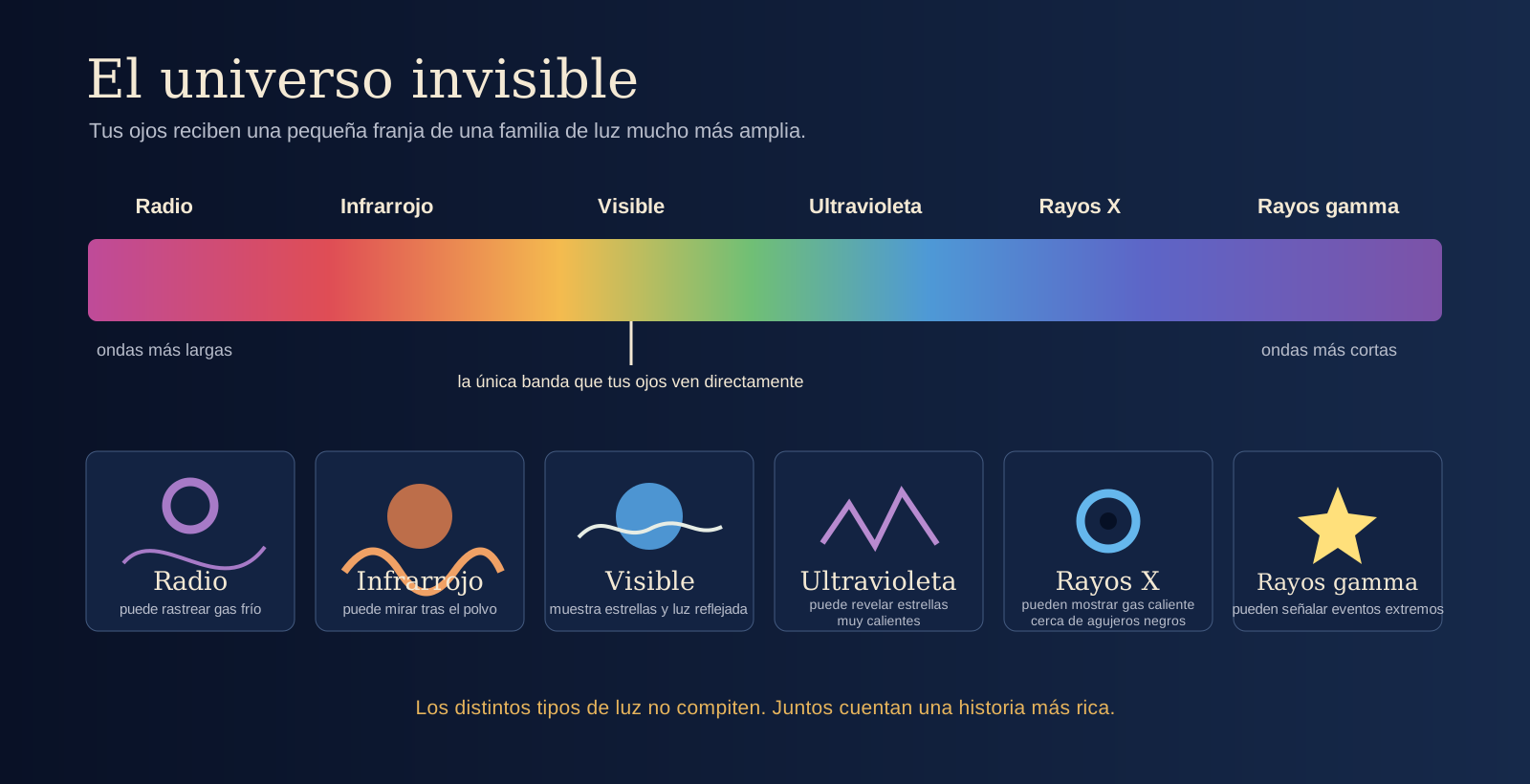
Cuando una imagen astronómica usa turquesa, violeta o dorado para un tipo de luz que no puedes ver, los colores a menudo se eligen para traducir datos a un lenguaje visual. Esto se llama una imagen de falso color o color representativo: “falso” significa que el color no es una vista literal de los ojos, no que la evidencia sea inventada. Es honesta cuando el pie de imagen explica qué representa cada color. La pregunta útil no es “¿esto es exactamente lo que verían mis ojos?”, sino “¿qué representa este color y qué evidencia me ayuda a notar?”.
“Un detector recibió un patrón de luz”. Esa es la evidencia al principio.
“Este color representa información infrarroja o de rayos X”. Eso vuelve visible una evidencia que no vemos directamente.
“Esto puede revelar polvo cálido, gas caliente o actividad energética”. Esa es una explicación comprobable con más evidencia.
1.5
Interactivo: cambia la ventana, cambia la historia
Usa el control deslizante para pasar de una vista de luz visible a una infrarroja y luego a una de rayos X de la misma galaxia modelo. La forma no cambia porque la galaxia se convierta de pronto en tres cosas diferentes. Cambia tu ventana, así que diferentes pistas se vuelven más fáciles de notar.
La galaxia no cambia; cambia la ventana de luz y, con ella, las pistas que se vuelven más fáciles de notar.
Luz estelar y la estructura amplia que los ojos y cámaras normales pueden recibir.
Polvo cálido y regiones de formación estelar que pueden ser más difíciles de notar con luz visible.
Gas muy caliente y regiones energéticas que crean otro conjunto de pistas.
Comprobaciones de conocimiento
Estas cuatro comprobaciones de bajo riesgo funcionan por completo en esta página. Los comentarios son para aprender, no para juzgar si perteneces a la ciencia.
Funciona sin conexiónEvidencia aplicada de aprendizaje
Requisitos de accesibilidad y apoyo al estudiante
- Primero sin conexión: todos los diagramas, capas de imagen, comentarios de formularios e interacciones viven dentro del paquete del sitio. La experiencia de aprendizaje central no depende de medios en streaming ni de imágenes remotas.
- Recuperación de progreso: el trabajo evaluado se conserva en el dispositivo durante una interrupción y se sincroniza con una cuenta de aprendizaje con sesión iniciada cuando hay conexión disponible.
- Privacidad desde el diseño: el simulador estelar personal usa una edad ingresada solo para crear un resultado en pantalla. La edad y la estimación de año de nacimiento nunca se envían con el registro guardado.
- Compatibilidad con teclado y toque: la actividad de dirección puede completarse seleccionando un bloque y después una casilla; la interacción de longitud de onda usa un control de rango nativo; y ambas simulaciones usan controles de formulario estándar y texto de estado en vivo.
- Lectura clara: el lenguaje de enseñanza principal usa párrafos breves, metáforas conocidas, encabezados, pies de figura y definiciones en lenguaje sencillo antes de repetir términos técnicos.
- Listo para imprimir: la impresión elimina la navegación y los controles, pero conserva explicaciones estáticas, diagramas, notas de simulación, tablas y preguntas de evaluación final.
- Apoyo visual: las figuras incluyen texto alternativo y pies de figura. El color apoya las ilustraciones de enseñanza, pero no lleva el único significado.
- Apoyo lingüístico: la edición completa en español—incluidas las figuras creadas localmente y las etiquetas interactivas—sigue la configuración global EN / ES del sitio.
Registro de CEU y finalización
| Tiempo de aprendizaje | 2.0 horas de descubrimiento |
|---|---|
| Valor de registro CEU | Módulo de descubrimiento — sin valor CEU. |
| Finalización interactiva | Orden de dirección cósmica, control deslizante del universo invisible, máquina del tiempo estelar personal y simulador de comunicaciones de control de misión explorados localmente. |
| Comprobaciones de conocimiento | Cuatro comprobaciones formativas completadas y comentarios revisados. |
| Examen acumulativo | Umbral de aprobación: 80% o más (8 de 10 preguntas). |
| Evidencia aplicada | Máquina del tiempo estelar iniciada y misiones de comunicación a la Luna, Marte y Alfa Centauri completadas. |
| Siguiente opción de ruta | Continúa con futuros módulos de descubrimiento AST-000 o comienza AST-101 cuando estés listo para una astronomía más cuantitativa. |
Registro de calidad curricular
Versión / fecha de revisiónAST-000-M1 v3.0 · 2026-08-08
Estado curricularMódulo de descubrimiento Nivel 0 publicado. Los módulos AST-000 2–5 siguen en desarrollo.
Revisión de audienciaDiseñado para personas principiantes absolutas, estudiantes jóvenes de 10 años en adelante y adultos curiosos. Revisar nivel de lectura después de cada actualización de localización.
Revisión de alcance científicoSolo astronomía conceptual introductoria. No se afirma enseñanza de cálculo avanzado, operación de equipos, navegación ni instrucciones de seguridad crítica.
Revisión de accesibilidadIncluye implementación con teclado, toque, impresión, formularios semánticos, estados en vivo, pies de figura, texto alternativo y recursos locales; volver a validar después de cambios de contenido o idioma.
Registro de recursos visualesLas figuras y capas de galaxias interactivas son diagramas de enseñanza creados localmente. Son ilustrativas, no imágenes de naves a escala exacta ni conjuntos de datos científicos calibrados.
Registro de validación de fuentes
- NASA Science — Solar System, Galaxy, Universe: What's the Difference?. Marco de dirección cósmica y contexto de escala galáctica.
- NASA Science — What is a light-year?. Definición de año luz y contexto de viaje de la luz.
- NASA Science — Time Travel: Observing Cosmic History. Explicación del tiempo de mirada al pasado.
- NASA Science — Introduction to the Electromagnetic Spectrum. Panorama del espectro y por qué la astronomía usa varias ventanas de luz.
- NASA Science — What is a light-year?. Velocidad de la luz, tiempo de viaje y comparación con Alfa Centauri usada en el simulador de comunicación.
Disparador de mantenimiento: revisar los enlaces de fuentes, la guía de edades, las notas de accesibilidad y el comportamiento interactivo local al menos cada 24 meses o después de una revisión curricular importante.
Examen acumulativo de fin de módulo
Umbral de finalización: 80% o más (8 de 10 preguntas) marca esta evaluación final como aprobada. Cuando tienes sesión iniciada, el resultado calificado se agrega a tu registro de aprendizaje. Si se cae la conexión, permanece en este dispositivo y se sincroniza cuando vuelves a estar en línea.
Dirección de aprendizaje: completa las diez preguntas antes de calificar. Si algo sale mal, lee los comentarios, vuelve a la parte relevante del módulo e inténtalo de nuevo.